
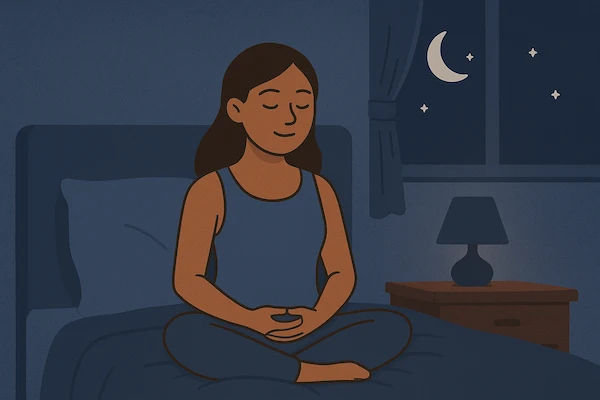
Do you struggle to fall asleep at night? If a racing mind or symptoms of insomnia are keeping you awake, meditation can be a transformative experience. This simple, accessible practice can reduce stress, increase calmness, and initiate the physiological changes your body needs for deep, restful sleep.
Learning how to meditate is easy, and the benefits can come quickly. This guide offers the basic steps and techniques to help you quiet your mind and start a path toward better sleep and greater harmony.
How Meditation Helps You Sleep
For many people, sleeping difficulty is directly related to stress. Stress causes anxiety and tension, making it hard to fall asleep and often worsening existing sleep problems. Meditation acts as a powerful relaxation technique that helps in several ways:
- Quiets the Mind: It gives your mind something to focus on (like your breath), which helps break the cycle of racing thoughts and worries.
- Promotes Calmness: When you meditate, a variety of physiological changes occur that slow your heart rate, reduce blood pressure, and ease muscle tension.
- Enhances Inner Peace: Regular practice can help you manage stress more effectively during the day, leading to calmer nights.
How to Start: A Simple 5-Minute Routine
As you begin, be patient with yourself. It takes time to learn how to quiet your mind. Start with just 3 to 5 minutes before bed and gradually increase the time as you feel more comfortable.
- Find a comfortable and quiet place. This can be sitting on your bed or lying down.
- Close your eyes and take a few slow, deep breaths.
- Focus your full attention on the sensation of your breath. Notice the air moving in and out of your body.
- When your mind wanders (and it will), gently acknowledge the thought without judgment, and then guide your focus back to your breathing.
- Continue this for a few minutes, allowing your body and mind to settle.
Try It Now: 3-Minute Meditation for Sleep
Press play on this short guided audio to begin relaxing your mind and body immediately.
3 Simple Meditation Techniques for Sleep
Let's look at specific techniques that are highly effective for promoting sleep.
1. Mindfulness Meditation
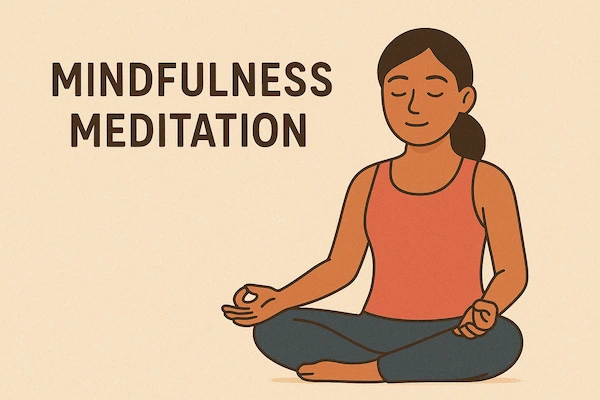
Mindfulness is the practice of being fully present and aware without judgment. This technique enhances your awareness of your breath, body, and thoughts.
- How to do it: Lie down comfortably. Focus on your breath. Inhale for 5 counts, hold for 5, and exhale for 5. As thoughts or emotions arise, simply observe them like clouds passing in the sky and gently return your focus to your breath.
2. Body Scan Meditation
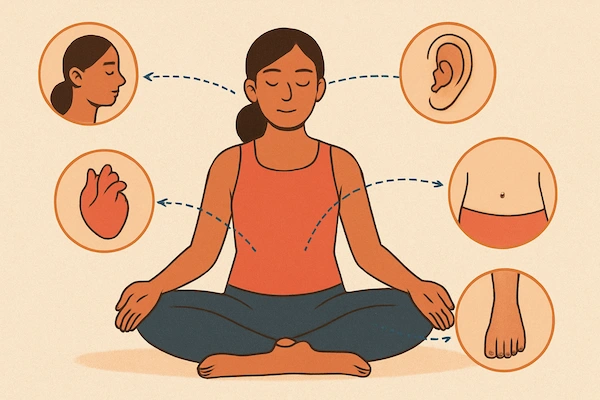
In a body scan, you bring focused attention to each part of your body, noticing any sensations like tension or pain and consciously relaxing them.
- How to do it: Lie down and close your eyes. Bring your awareness to your face, softening your jaw and facial muscles. Move down to your neck and shoulders, releasing any tension. Continue this process all the way down to your toes. If your mind wanders, gently bring it back to the part of the body you are focusing on.
3. Guided Meditation
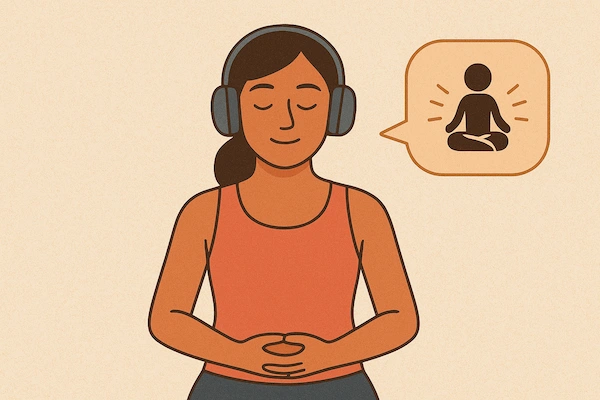
A guided meditation is when a teacher's voice leads you through the steps. They may instruct you on how to breathe, relax your body, or visualize calming images and sounds. This is often the easiest method for beginners.
- How to do it: Find a comfortable position and play a recording. Simply focus on the person's voice and follow their instructions. If your mind wanders, gently return your attention to the recording.
Try a Guided Yog Nidra Meditation for Sleep

About the Author: Yogi Sandeep
Born in Rishikesh into a traditional family where the Vedic tradition has been a way of life for generations, Yogi Sandeep is the founder of Raj Yoga Rishikesh. He is an E-RYT 500 Teacher, holds a Master's degree in Yoga, and has over a decade of teaching experience.
Meditation & Sleep FAQs
What if I fall asleep while meditating?
That's perfectly okay, especially when meditating for sleep! It simply means your body is getting the relaxation it needs. Don't consider it a failure; consider it a success.
How long does it take for meditation to help with sleep?
Some people feel benefits the very first night, while for others it may take several days or weeks of consistent practice. The key is to be patient and make it a regular part of your bedtime routine.
Is it better to meditate sitting up or lying down in bed?
For the purpose of sleep, lying down in bed is ideal. It puts your body in a resting position and allows you to drift off naturally once the meditation is complete.
Ready to Master Your Mind?
Meditation is a life-changing skill. Learn the authentic techniques to calm your mind, reduce stress, and guide others in our comprehensive Meditation Teacher Training.
Explore Meditation Training →